nature travel, wildlife tours, adventure travel and
general travel to Chile, Peru, Argentina and Antarctica
PERU
Manu Wildlife Center, Machu Picchu, Sacred Valley, Cusco and the Palomino
Islands
Fly
to Peru for a 8-day exploration of the wildlife and Incan culture
of southern Peru. We have crafted this tour to use up just five business
days, yet have a surprisingly diverse experience in Peru. By departing
from Miami at 11.30pm Friday and from Lima just after midnight the
following Sunday we can spend 8 full days in Peru, including four
and a half days exploring Manu, Peru's richest wildlife area. We spend
a day at Machu Picchu, and explore the spectacular and intricate ruins
at Ollantaytambo in the Sacred Valley, as well as the ancient city
of Cusco. Our last day is spent visiting several islands, home to
a variety of wildlife including penguins and sealions. By adding one
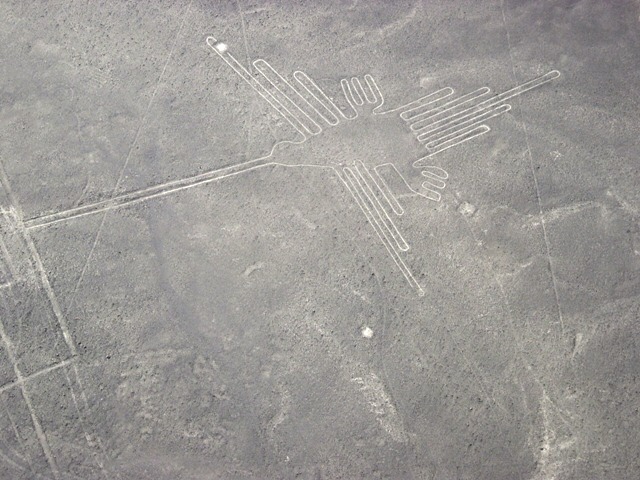
day to the itinerary you can also see the Nazca Lines. Naturally those
with more time can spend more time in Peru, and flights are also available
from other cities.
Day 1 - Friday:
Home City / Miami / In Flight
Fly from your home city to Miami from where you depart on Lan flight
2511 for Lima at 11.55pm. Other gateway cities are also available.
Day
2 - Saturday: In Flight/ Lima / Cusco/ Ollantaytambo
Arrive in Lima at 4.35am this morning. Pass through immigration and
customs, and have breakfast in the new Lima airport – there’s
even a Starbucks. At 8.25am fly to Cusco on Lan flight 73, arriving
at 9.40am. You are met and driven to Ollantaytambo, about 1.5 hours
away. Overnight at Ollantaytambo. After enjoying a few hours sleep,
visit the amazing Ollantaytambo ruins. One of the more interesting
features at Ollanto is a fountain that stops and starts with a pass
of the hand. When a hand is placed in the flowing water, it stops.
Touch the entrance again, and it starts. Easier than the Clapper,
and predating touchscreens by half a millenium. The area around the
upper ruins is good for Giant Hummingbird. (*M,L,D)
Day
3 – Sunday: Ollantaytambo/ Machu Picchu/ Cusco
Take an early morning Vistadome train to Machu Picchu; the trip is
an hour and twenty minutes. By
overnighting in Ollanto
and taking an early train we have up to a couple of hours at Machu
Picchu before the crowds arrive. After arrival at the Machu Picchu
Village (was Aguas Calientes) station we take the 20 minute bus ride
up to Machu Picchu itself. Our guide takes us through the ruins, explaining
its history and culture, for about 2 hours. After that you can continue
with the guide, or explore on your own. At 2.30 we return down the
mountain – about 20 minutes – to Machu Picchu Village,
in time for the 3.25pm train to Cusco. Alternatively it's about an
hour walk down a trail and along the road to the village; there is
excellent birding especially along the river at the bottom, although
the upper part is a habitual spot for Inca Wren. The 3.25 is the only
train back to Cusco, and so it is longer and more crowded than the
one from Ollanto. However, you do get a decent snack and hot tea on
board, and there is entertainment as well. At Poroy, the last station
before Cusco, we get off and transfer to our Cusco hotel. This early
departure from the train saves about one hour of the final switchback
part of an already too long train trip. We arrive back in Cusco about
7pm. (B,L,S)
Day
4 – Monday: Cusco/Boca Manu/ Manu Wildlife Center
Early morning we transfer to Cusco airport for a forty minute flight
in a radar-equipped plane to Boca Manu, a small airstrip on the river.
From here we take a motorized canoe for a 90 minute journey down the
Madre de Dios River, arriving at the Manu Wildlife Center in time
for lunch.The Center is located east of the Manu River on the north
bank of Madre
de Dios River in several thousand acres of private reserve adjacent
to the National Park. The lodge has 22 fully screened private bungalows,
separate complexes with hot showers and toilets, a large fully screened
dining room and a bar with hammocks for relaxing. The lodge has no
electricity; lighting in the communal areas is by
kerosene lamp and candles, with the paths around the lodge complex
lit by kerosene lamps. Lighting in the guests bedrooms is by candle.
An 110V generator is available from which camcorder batteries can
be recharged. The afternoon will be spent exploring some of the 30
miles of clear forest trails that surround the lodge. On these trails
we have an excellent chance to encounter some of the 12 species of
monkeys, which include the Monk Saki and Emperor Tamarin, which inhabit
the surrounding forest. Lizards, often rainbow-colored insects, and
naturally birds will also be part of our afternoon. After dinner wel
have a short night excursion to explore nocturnal life in the rainforest.
(B,L,D)
Day
5 - Tuesday: Manu Wildlife Center
Rising before dawn, we take a 25 minute boat journey downstream to
the only large parrot and macaw clay lick in the Manu area. From a
floating catamaran blind (in the dry season this blind may be on the
ground due to river water level) we are afforded excellent views and
photo opportunities of hundreds of medium-sized and large parrots
arriving first at the lick, followed by the large Red-and-Green Macaws
arriving to eat the clay. After lunch at the Center we continue to
explore the forest trails surrounding the lodge, or have a nap in
prepaaration for a late evening. We plan to spend the late afternoon
up a 110 foot high canopy platform to watch the last frantic activity
in the rainforest canopy, the local rush hour, before night settles.
We can return for dinner back at the Center, or pack a meal for the
leisurely hike about 60-75 minutes through the night forest to the
Amazon’s largest known Tapir clay lick. Here a 17x17 foot observation
platform perches almost 20 feet above the lick, where we wait for
the lumbering Tapirs to arrive, using spotlights we hope to observe
and photograph them in action. The tapirs usually visit the clay lick
between 9:00 pm and midnight, however their activity continues until
dawn. (B,L,D)
Day
6 – Wednesday: Manu Wildlife Center Todaypromises to be an exciting visit to Blanco Oxbow Lake.
After another early morning departure by boat and short
hike from the river we arrive at the lake, populated by a variety
of aquatic life and water birds, including the prehistoric-looking
hoatzin; there is also the possibility of seeing the resident family
of giant otters. After returning for lunch at the Center your guide
is available to further explore the forest trails for more wildlife
encounters; alternatively you can independently experience this expanse
of rainforest habitats on the many walking trails radiating from the
lodge. You may also choose to take some downtime in this usually quieter
time of the day. This evening from the late afternoon until after
dinner we have an opportunity to search for caiman and other nocturnal
life along the riverbank by boat, after dark using lights to see the
red crocodilian eyeshine. (B,L,D)
Day
7 - Thursday: Manu/
Boca Manu/ Cusco
After an early breakfast we return by boat to Boca Manu, then fly
back to Cusco. You are met and start your guided discovery of this
ancient city. Overnight tonight in Cusco.
(B,L)
Day
8 – Friday: Cusco/Lima
Continue with your guided tour of Cusco. At 4.40pm fly from Cusco
to Lima on Lan flight 38, arriving at 6pm, where you transfer to your
hotel in Miraflores.There are several nice restaurants
close to the hotel, as well as the hotel's own restaurant, and there
is a concentrated area of good shopping also nearby. (B)
Day
9 - Saturday: Palomino Islands
Today travel to the port town of Callao, about 45 minutes from Miraflores.
At 10am you start a three hour cruise on the 60ft catamaran
Spondylus
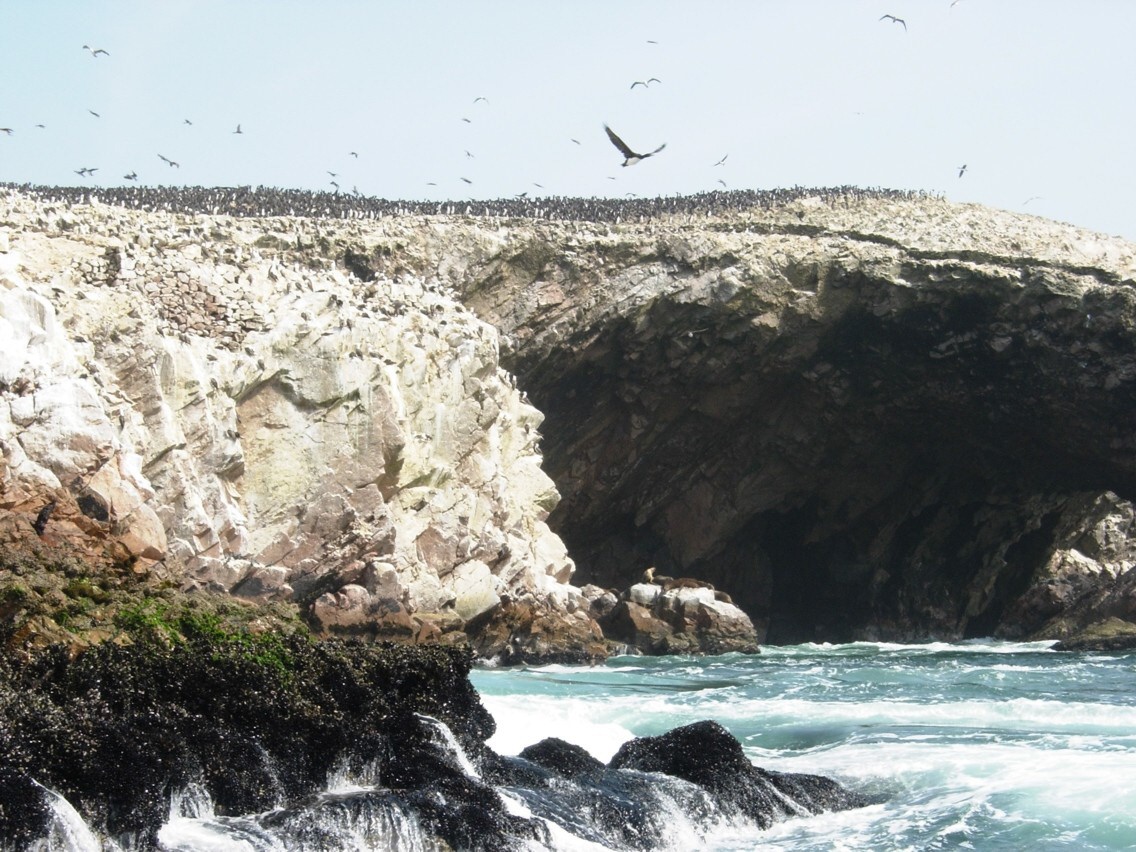
to the islands of Fronton, Cavinzas, Palomino and San Lorenzo. While
you do not land on the islands the boat spends time at each to allow
observation of the wildlife or other attractions. Between the dock
and the first stop, Fronton, may seabirds will be seen, including
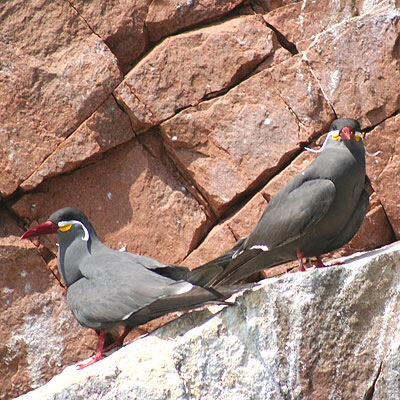
the beautiful Red-legged Cormorant. Peruvian Boobies, Inca Terns and
many others take advantage of the near-shore upwellings of cold water,
providing a rich bounty. The first island, Fronton, has ruins of a
prison, which
was blasted by the Peruvian Navy to overcome a riot and hostage taking
by the prisoners. One of the hostages and 135 prisoners were killed.
Many of the prisoners were Shining Path. After grim Fronton the island
of Cavinzas is home to many seabirds, and once again a stop is made.
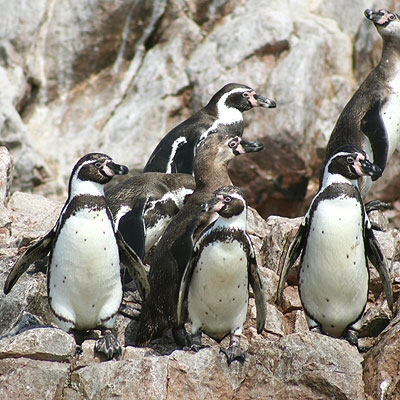
The first sea-lions are usually seen here, maybe some swimming Humboldt
Penguins, and occasionally dolphins. From Cavinzas the boat heads
across to Palomino, home to a colony of about 4000 Southern Sealions,
which abound in the nearby waters. The boats approach bring hundreds
towards it, “singing” as the swim. It’s quite a
spectacle, as you can see from teh video (please forgive the pixallation
due to Youtube reducing the size of the file for easy downlaoad).
From Palomino the boat heads back, first stopping at San Lorenzo,
home to a colony of Humboldt Penguins. You get back to shore about
1pm. You are met on your return and transferred to a nearby restaurant,
Pescaderia (meal at own expense). This is one of Peru’s best
restaurants – the name indicates their specialty - in an out
of the way place with no sign or indication that it is a restaurant;
you basically enter through the back door. After lunch transfer back
to Miraflores. (B)
Day
10– Sunday: Lima/ Miami/ Home City
Fly back to Miami at 20 minutes past midnight this morning on Lan
flight 2514, arriving in Miami at 5.45am. After passing through immigration
and customs connect with your flight to your home city.
(*B)
Or,
add a day for the Nazca Lines:
Day
9 – Saturday: Lima/ Ica/ Paracas
This morning we travel along the stark desert coast to Ica, about
3.5 hours south of Lima. Near Ica are Peru's famous
Nazca Lines, huge geoglyphs created by the Nazca culture about 500
BCE by removing surface rocks to reveal the light colored ground beneath.
The symbols are a mix of animal and human figures and geometric shapes.
At the small airport you will receive an introduction to the Nazca
Lines, then we board our small airplane for a 45 minute flight over
the lines, the only way to see and appreciate them. After our return
to the airport we visit the Regional Museum, with its collection of
artifacts including textiles, pottery, metalware and mummies from
the several cultures that have inhabited this area. We'll enjoy lunch,
and visit the Huacachina Lagoon, a surprising oasis in this harsh
desert landscape. Mid afternoon we return a little way north to Paracas
on the coast. Paracas has an important nature reserve, both on the
land and out on the Ballestas Islands, and we'll visit both sections.
If time permits after our drive from Ica we'll visit the Peninsula,
with views out over the Pacific ocean from 100ft cliffs; there are
a number of rock formations rising from the water which might bring
out the photographer in you if the light is right. We overnight in
our modern and comfortable hotel in Paracas. (B,L,D)
Day
10 - Sunday: Ballestas Islands / Paracas / Lima
This morning we visit the Ballestas Islands. On the way out we look
shoreward to see the Candelabrum, a huge, 700ft high geoglyph on the
cliff in the shape of a trident. While easily mistaken for another
part of Nazca culture, the candelabrum hails from a later time, although
its origin is unknown - theories range from ancient 2,500 year old
Nazcas to more or less modern sailors creating a sailing guide. The
most accepted explanation is that the Paracas culture created it around
200BCE, as pottery of that era has been found in the vicinity. Once
closer to the islands we start to see their weathered shapes, and
notice the birds wheeling overhead.
We may begin to hear the sea lions voices over the water, and as we
get closer they will likely approach the boat. While we do not land
on the islands the boat spends time at each to allow observation of
the wildlife, at close quarters. Many seabirds will be seen, including
the beautiful Red-legged Cormorant, Peruvian Booby, Inca Tern, Chilean
Pelican and others. Humboldt Penguins nest on the islands, and we
usually see these
swimming and diving in the water as well. After our return to the
mainland we'll visit the main information center for the reserve,
look for other wildlife here, and walk out to the lookout tower to
observe the Chilean Flamingoes that gather here. Most visitors are
surprised to see flamingoes in this harsh arid environment - all the
coast of this part of Peru is desert, and rainfall is rare. We then
head north, back along the coast, and return to Lima. We expect to
arrive about 7 to 8pm, and go directly to the airport in preparation
for our flight home. Although the airport is new and modern, checking
in will still be a two-hour process. Once check-in has been done you
can relax in the VIP lounge that we have prebooked for our tour participants.
Most flights leave around midnight or very early in the morning from
Lima, and these comfortable surrounds will be welcome before the flight.
(B,L)
Day
11– Monday: Lima/ Miami/ Home City
Fly back to Miami at 20 minutes past midnight this morning on Lan
flight 2514, arriving in Miami at 5.45am. After passing through immigration
and customs connect with your flight to your home city.
(*B)